
Important Meta trial begins as lawyers argue over witnesses and damages

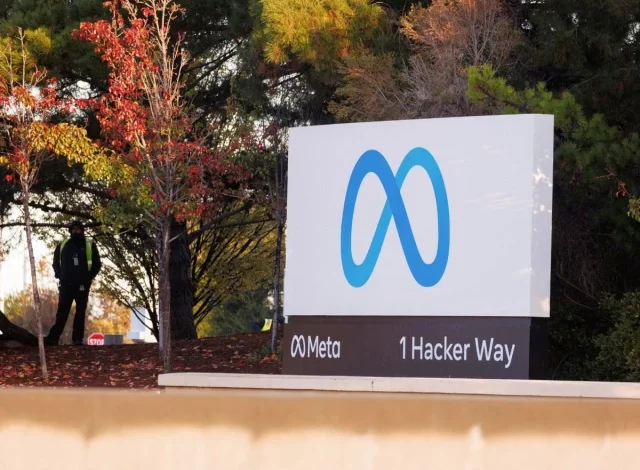
A security guard watches over the Meta sign in front of the headquarters of Facebook’s parent company, Meta Platforms Inc, in Mountain View, California, U.S., November 9, 2022. PHOTO: REUTERS
Facebook parent company Meta will defend itself in a landmark social media trial that begins Tuesday in California, where lawyers have argued over witnesses and financial penalties.
A coalition of states sued Meta in 2023, and the four states now going to trial were selected to represent them. Lawyers for the states will argue that Meta deliberately made Facebook and Instagram addictive to children, in violation of state and federal laws.
In recent days Meta, which has more than three billion users worldwide, tried to prevent former Meta employee and expert Arturo Béjar from testifying. Federal Judge Yvonne González Rogers dismissed the company’s request, giving the states an early victory. In his ruling, he described it as a “Hail Mary” effort to “eliminate strong testimony” for the plaintiffs.
Bejar has previously testified against the company, including in a trial in New Mexico that Meta lost.
Lawyers in California, Colorado, Kentucky and New Jersey are expected to question Bejar about Meta’s security and growth practices, and whether the company publicly misrepresented what it knew, according to a court document.
In a new filing Monday, Meta asked the judge to restrict the scope of testimony from another potential expert witness, Colin Gray, whom the states intend to ask about “dark patterns”: features designed to manipulate users into making a company’s preferred decisions.
Read: Report accuses Meta of systematically suppressing Palestinian content
Meta founder and CEO Mark Zuckerberg is among the star witnesses expected to testify. Meta “strongly disagrees” with the accusations in the trial, a spokesman said AFP.
During a hearing last week, a lawyer for the states said they are asking for about $200 billion, not penalties exceeding $1 trillion, as Meta had claimed in a court filing. The lawyer said they believe Meta calculated that figure “for shock value.”
In addition to economic sanctions, states are demanding changes to Meta applications.
Eight people were selected last week to serve on an advisory jury, but the judge will make the final decision in the case. The trial is expected to last six weeks and a verdict is expected in early October.
Although it is not the first lawsuit that seeks to hold a social media company responsible for safety and mental health problems, it could become one of the most important.
‘A broader reckoning’
Last week, Rogers and attorneys for both sides questioned potential jurors about their views on social media and Meta, asking them whether they or their children had social media accounts and whether social media is responsible for mental health, among other questions.
One prospective juror said he believed social media plays a role in mental health and compared the serotonin boost some people feel from doomscrolling to cocaine use.
The case could be “the beginning of a broader reckoning” for Meta, Nora Freeman Engstrom said. AFP via email. She is a law professor and associate dean at Stanford. It will be important to see the “gap” between what Meta knew privately and what he revealed publicly, Engstrom said.
“The big issue here is reputational damage” and being forced to make major changes, said Vincent Joralemon, director of the Berkeley Life Sciences Law and Policy Center. AFP.
Read more: Meta says it has deleted 756,000 Australian teen accounts as ban enforcement looms
Experts see parallels with a three-decade agreement between dozens of U.S. states and tobacco companies.
“It really feels like tobacco in the 1990s,” Joralemon said. While cases over social media harms revolve around the intersection of technology and addiction, the case against Meta focuses on its business practices, similar to when U.S. regulators sued tobacco companies, Joralemon said.
Dozens of US states sued four major tobacco companies for downplaying the harmful health effects of their products, and in 1998 they won a landmark settlement that included financial penalties and changes to the products’ marketing. Those tobacco companies have paid out more than $176 billion since then, according to data from the National Association of Attorneys General.
They will continue to pay $9 billion annually, according to the agreement.
Source link


