DOGE’s cuts to USAID have worsened the Ebola outbreak in Congo that has killed 500 people, experts warn.

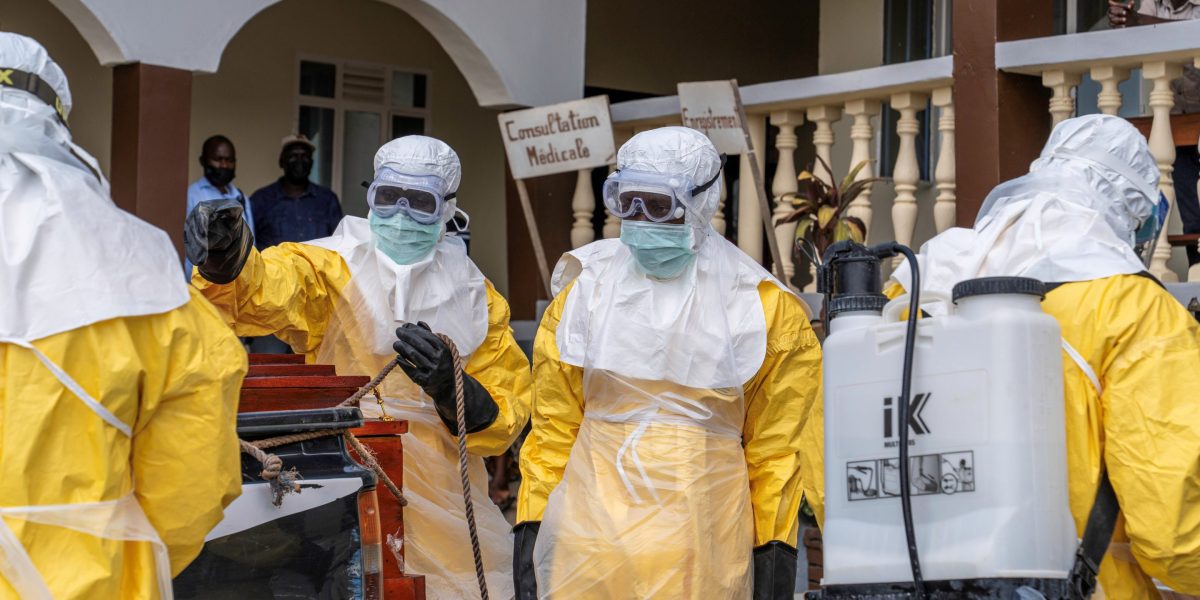
More than 500 people have died in the Democratic Republic of Congo due to the ongoing Ebola outbreak, as experts say cuts in international aid have hampered the country’s ability to contain the virus.
There have been 1,561 recorded cases of Ebola, including 506 deaths, since the outbreak was declared on May 15, according to the DRC Ministry of Health. The World Health Organization has deemed the first month of the Ebola outbreak the worst on record, and slowing the spread of the virus has been difficult due to a lack of drugs to treat Bundibugyo, the strain responsible for the latest Ebola outbreak.
The International Rescue Committee, a humanitarian organization, has previously said that major cuts in international aid have weakened health systems and preparedness, leaving Congo with a weaker health system now than during the 2018-2020 outbreak that killed more than 2,000 people.
“The warning signs are flashing red,” Bob Kitchen, IRC’s vice president of emergency operations, said in a statement. “Increasing conflicts and dwindling global aid funds have dismantled defenses at the wrong time. The lesson from all previous outbreaks is clear: delay costs lives. Risks are increasing and resources are shrinking; those are the cruel statistics facing global aid today.”
In February 2025, the Trump administration, a special advisory group led by Elon Musk, successfully helped the US Agency for International Development (USAID), the federal agency responsible for issuing foreign aid, complete about 83% of its programs.
DOGE officially ended on July 4, but its results remain.
Total US aid is being cut from $14 billion in 2024 to $3.7 billion in 2025, according to Refugees International. Cuts in foreign aid last year are estimated to have led to more than 750,000 preventable deaths.
How USAID cuts fueled the Ebola outbreak in the Congo
USAID played a key role in preventing previous Ebola outbreaks. Phuong Pham, who is a Professor at Harvard TH Chan School of Public Health, said in an interview with this college that in the past the US was the global leader in dealing with outbreaks of diseases including Ebola, with USAID as an effective arm to deal with public health problems.
In the past, the agency would have a permanent presence in countries like the Congo and would expand the capacity of the Ebola laboratory and train local health workers to detect signs of the virus to collect samples. USAID will also coordinate between local communities and other agencies such as WHO and UNICEF. During the outbreak of the disease in 2018, USAID helped to vaccinate more than 300,000 people against the disease, according to Pham.
After the latest outbreak, the US State Department said it would provide $23 million in emergency aid to Congo and Uganda to strengthen efforts to contain Ebola by working to build 50 clinics for Ebola testing, isolation and treatment.
Last month, the White House also requested more than $1.4 billion from Congress to deal with the Ebola outbreak, including $800 million in humanitarian response funds. Resources dedicated to dealing with outbreaks are important, Pham said, but they don’t replace the emergency infrastructure that USAID is helping to create.
“This funding is much needed and can save people’s lives,” he said. “That said, the emergency response cannot fully include the ongoing investment needed before an outbreak begins.”
Craig Spencer, an emergency physician and associate professor at the Brown University School of Public Health, said the impact of the USAID cuts due to DOGE is already being felt. In an New York Times op-ed, noted that samples of the virus at a lab in Kinshasa, Congo, were at the wrong temperature, part of the activities overseen by USAID.
“I have seen Ebola up close. I got it when I was treating patients in West Africa in 2014,” Spencer wrote. “I know how dangerous this disease can be—and how unprepared we are for it to return.”
The State Department did not immediately respond Good luckrequest for comment.
Musk’s reaction to DOGE’s role in the USAID outcome
Musk, on the other hand, denied that DOGE has a negative role in allowing the spread of this virus. In February 2025, Musk admitted that DOGE had ended in error—and immediately restored funding for the Ebola response, saying there had been no disruption to the program.
Democratic Rep. Ro Khanna last month accused Musk and DOGE of killing millions of children because of cuts to USAID and other key agencies, a claim Musk disputed, citing several posts in X that contradicted Khanna’s claim.
“Sure,” Musk wrote in response to one post. And they won’t mention a single dead person’s name among the ‘millions’ they say have died. Not a single word!”