


Eruptions are common at Anak Krakatau, a small volcano between the Indonesian islands of Java and Sumatra. Much of his activity remains relatively mild, but he occasionally performs more impressive and dangerous displays of strength. In early September 2026, a strong eruption that lasted more than 24 hours spewed gases and ash into the atmosphere, disrupting thousands of flights and degrading air quality in some parts of the country, including the capital city of Jakarta.
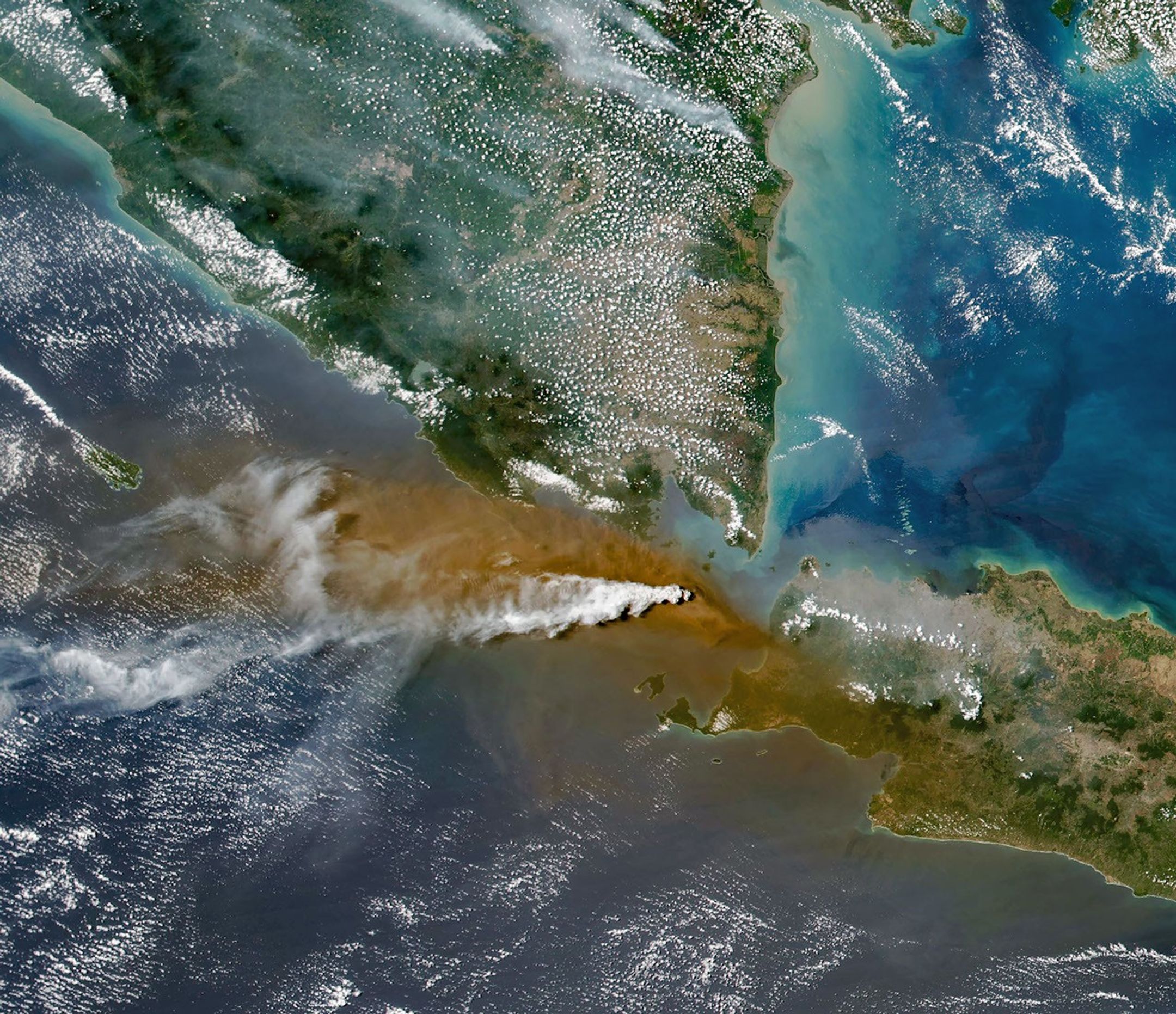
Satellites that passed over the area during the September 5 eruption captured images of the explosive activity. In the scene above, acquired with the NASA-USGS Landsat 8 satellite’s OLI (Operational Land Imager), a white plume of volcanic gas ripples above a cloud of brown ash. Below, a wider view captured by the VIIRS (Visible IR Imaging Radiometer Suite) on the Suomi NPP satellite shows the volcanic material dispersing over a large area.
Indonesia’s meteorological agency reported that ash had reached altitudes of up to 6,000 meters (20,000 ft) to the east of the volcano and 15,000 meters (50,000 ft) to the west on September 6. The presence of ash in the atmosphere caused the temporary closure of eight airports in Java and Sumatra, interrupting almost 3,000 flights in and out of the area, according to media reports.
The ash fall affected populated areas, particularly east of Anak Krakatau in Jakarta and other parts of West Java, the Indonesian Humanitarian Coordination Platform (IHCP) reported. Volcanic ash poses health risks to people and can irritate the respiratory tract, eyes and skin. However, this air quality hazard differs from smoke produced by peat bog fires in other parts of the country in terms of particle characteristics, dispersion patterns and protective measures, the IHCP noted.
On September 6, Anak Krakatau’s continuing explosive eruption subsided, although the volcano continued to rumble. It returned to a more typical pattern of Strombolian eruptions, characterized by intermittent spurts of ash and volcanic material. Airports had resumed operations on September 8, but the volcano remained at the second-highest alert level nationwide, as it has been since early July.
NASA Earth Observatory images taken by Michala Garrison, using Landsat data from the US Geological Survey, and VIIRS data from NASA EOSDIS LANCE, GIBS/Worldview and the National Polar Orbiting Association Suomi. Story by Lindsey Doermann.
September 5, 2026: Landsat
- ABC News (September 7, 2026) Flights to and from Indonesia’s capital resume after a volcanic eruption forced a two-day shutdown. Accessed September 8, 2026.
- BBC (2026, September 8) Indonesian airports reopen after volcano eruption stranded 340,000 people. Accessed September 8, 2026.
- BMKG (2026, September 7) Imbas Sebaran Abu Vulknaik Anak Krakatau, 8 Bandara Ditutup Sementara, BMKG Minta Waspada dan Tenang. Accessed September 8, 2026.
- BMKG (2026, September 6) BMKG Terus Pantau Dampak Erupsi Gunung Anak Krakatau. Accessed September 8, 2026.
- Global Volcanism Program (2026) Krakatau. Accessed September 8, 2026.
- Indonesian Humanitarian Coordination Platform (2026, September 6) Anak Krakatau eruption, volcanic ash fall and concurrent forest fire and haze situation. Accessed September 8, 2026.
- NASA Earth Observatory, Anak Krakatau. Accessed September 8, 2026.
Source link


